
The Palestinians are Ostracized by World War II: Israelis, Gaza, Israel and the United States in the Light of the Israeli-Israel War Crime
The crisis in the Middle East is a test of our humanity, asking how to respond to a grotesque provocation for which there is no good remedy. In this test, we in the west are not doing well.
I’ve flown into Tel Aviv, where there is graffiti that says “Destroy Hamas.” The determination to dismantle Hamas, whatever the costs, is the reason why Israelis have been shattered by Hamas terrorism and kidnappings. While Tel Aviv is calm, Gaza is likely on a path to something much worse.
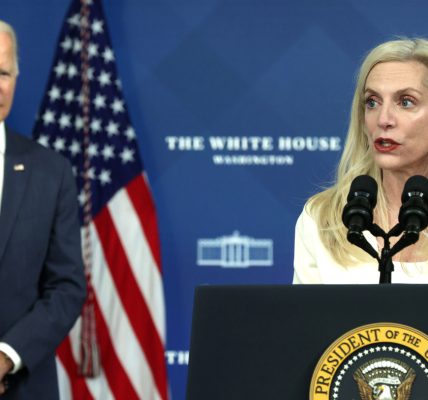
The United States has good principles, but I fear that President Biden has put a hierarchy of human life in official American policy. He should have denounced the killings of Jews by Hamas, but he has not been very clear about his treatment of Gazan lives. It is not always apparent whether he is standing with Israel or with Benjamin Netanyahu, who has been a constant obstacle to peace.
The Biden administration has called for more assistance for Israel and aid for Gazans. Is the idea that we will help paying for humanitarians to clean up blood caused by our weapons questionable?
What are we to tell Dr. Iyad Abu Karsh, a Gaza physician who lost his wife and son in a bombing and then had to treat his injured 2-year-old daughter? He couldn’t take care of his niece or sister for he had to deal with bodies of his loved ones.
In his speech on Thursday, Biden called for America to stand firmly behind Ukraine and Israel, two nations attacked by forces aiming to destroy them. It is fair enough. But suppose Ukraine responded to Russian war crimes by laying siege to a Russian city, bombing it into dust and cutting off water and electricity while killing thousands and obliging doctors to operate on patients without anesthetic.
Americans would probably shrug and say it was Putin that started it. Too bad they didn’t choose a place else to be born.
The end of Hamas and the joys of God: a message to Gazans and Israelis, for Israelis to uphold our values
The view is a reflection of a practical and moral mistake. While I would love to see the end of Hamas, it’s not feasible to eliminate radicalism in Gaza, and a ground invasion is more likely to feed extremism than to squelch it — at an unbearable cost in civilian lives.
A prolonged ground invasion seems to me a particularly risky course, likely to kill large numbers of Israeli soldiers, hostages and especially Gazan civilians. We are better than that, and Israel is better than that. The Syrians did leveling cities in their country, and it shouldn’t be done by the Israelis in Gaza.
The best answer to this test is to try even in the face of provocation to cling to our values. That means that despite our biases, we try to uphold all lives as having equal value. If your ethics see some children as invaluable and others as disposable, that’s not moral clarity but moral myopia. There should not be killings of Gazan kids in order to protect Israelis.
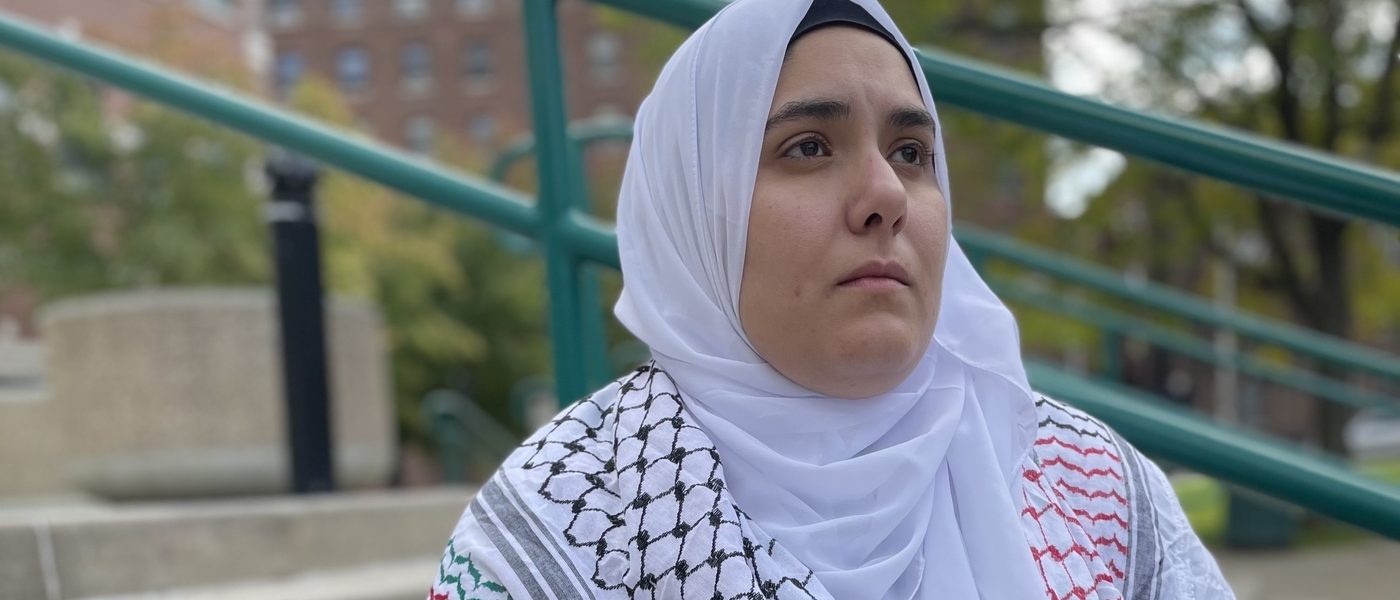
Aziza Hasan, a devout Muslim, looked out at the group gathered around her, spoke of the loved ones who had died in Israel and Gaza and began reciting the first chapter of the Quran.
She told the crowd that God was on her right side. Raphael, the God’s healer, behind me. Above my head is God’s divine presence.”
Los Angeles, a city rich in history: the tragedy of the first two years of the Jewish-Israeli war and how many Palestinian lives are left behind
The two woman can recall details of the long, brutal history of clashes and wars pitting Israel against its neighbors to the north, east and south — and how those clashes sent fearful shock waves through Los Angeles, a city with one of the nation’s largest populations of Muslims and Jews.
Over 500 Los Angeles Muslims and Jews have been helped through NewGround to learn to listen, disagree, empathise and become friends thanks to the fellowship program.
“I’m not the person that I used to be two weeks ago,” said Amjad Abukwaik, who was born in Gaza, but now owns Sheefa Pharmacy on Palestine Way in the Paterson enclave.
Every person in Little Ramallah seems to have a loved one who was killed in the last two weeks. There have been thousands of friends killed following the outbreak of the Israel-Hamas war.
The Arabic word for uncle is Abukwaik Amu. These days, Abukwaik is very quiet, he hardly speaks to the customers he used to banter with every day.
Republican leaders have introduced a bill prohibiting anyone with a passport issued from the Palestinian Authority from seeking asylum since this war began. It is hard for a Palestinian to do so in the U.S.
Rania said that it’s not part of the discourse. It goes against the idea that Palestinian lives aren’t worth it. We’ve been dehumanized for years. “
“I’ve always prided myself in the fact that I have the right to speak, and I’m American too,” he said. “I feel like I’m not only speaking, I’m yelling and screaming at the top of my lungs, to deaf ears.”
Gaza Without Back: Janet Lucas’s Journey to Holy Hill with Michael, a Milk Farmer in Lone Rock, Wisconsin, during the September 11, 2001, Middle East, Israel
As the trucks made their way through the Rafah border, hundreds of foreign nationals gathered on the Gaza side, hoping to escape the violence. But no one was allowed to leave. Aid agencies hope that there will be more supplies arriving in the coming days on the Egyptian side of the border. The U.S. estimates that hundreds of Americans are stuck in Gaza.
A dairy farmer in rural Lone Rock, Wis., said that the appeal by the president for military aid was going to be a hard sell in the area.
Mr. Schmidt owns a dairy farm in a district that has voted for the winner of the presidential election in every election since 1980, but did not vote for President Trump in 2020.
Mr.Schmidt said that money comeshard here. We have had a tough year farming for us. I think that as a country we support Israel, but I don’t think we can do much about it.
In suburban Milwaukee, however, the questions posed by the violence in the Middle East and Ukraine were less economic than moral for Janet Lucas. Hamas attacks against Israelis triggered her, she said.
“I understand that there has been a fight between the two for years and years,” said Ms. Lucas, 58. She said that the way that the Hamas killings had been handled broke her heart. It took me back to 9/11 when I thought about who would be next.
On Friday she went to Holy Hill, a basilica on a forested hillside, a country drive away from her community, Brookfield, to take in the fall colors with her son, Michael, 25, who was in town from Tampa, Fla. As African Americans, they said, they felt conflicted about the president’s call to side with Israel. They could not condone terrorist attacks, they said, but sympathized with Palestinians and what they see as the long discrimination they have endured.
Janet Lucas said that she sat in the middle because she could see both sides of the issue. “And then I also think, is there another way, could the United States or any other country get involved to help them to come to some form of peace?”
The Hamas-Israel War on the Gaza Strip: State of the Art and the Prospects for Next-Generation Security in Israel
An armed hostage rescue at the moment is considered too risky and dangerous to attempt by experts, leaving officials from several countries feverishly continuing negotiations.
Some Hamas political leaders are trying to distance themselves from the worst atrocities that happened on Oct. 7, which they now claim was done by members of other armed groups. The killing of civilians is depicted in the videos released by Hamas.
The Shin Bet had previously said that humanitarian aid would be allowed into Gaza on Saturday morning, as a result of the hostages’ release Friday night. Hamas might have wanted to inspire Israelis who have loved ones in captivity in Gaza to demand that their government stop the ground invasion until more hostages are released, according to him.
There are still many questions of why, of all the 200 or so hostages, the Raanans were released. Robert D’Amico, a former F.B.I. agent who worked on hostage cases overseas, said it may have been the fact that the two were healthy.
Another obvious reason the Raanans were chosen, Mr. D’Amico and others said, is that they are Americans — though there are up to 10 more Americans in captivity. The Biden administration could be helping to temper Israeli retaliation on Gaza. President Biden and his team have been closely advising Israel on how it is waging its war on Gaza, although it is not clear how much Israel actually listens to what the Americans say.
The Israel Defense Force will increase its airstrikes in Gaza according to Rear Adm. Hagari. The dangers to our forces will be minimized in the next stages of the war. Hagari said that they were going to increase the attacks. He called on Gaza’s residents to move south “for your own safety.”
The tally includes five Palestinians killed in separate incidents on Sunday. Israel carried out an airstrike during a battle in another West Bank refugee camp last week, in which 13 Palestinians, including five minors, and a member of Israel’s paramilitary Border Police were killed.
The people are being held in Gaza. Military spokesperson Lt. Col. Richard Hecht said on Sunday that Israeli strikes overnight had killed dozens of Palestinian fighters, including the deputy chief of Hamas rocket forces.
In response to questions from The New York Times, the Israeli military said that it did not intend to consider those who have not evacuated south to be members of armed Palestinian groups, which it considers terrorist organizations. In a statement it says that it doesn’t target civilians. The Israeli foreign ministry has a spokesman that said there was no basis in the suggestion that the warnings could amount to ethnic cleansing.
Israel said that it hit a terrorist compound in Jenin in the West Bank, as well as members of a Hamas cell, who were planning attacks.
Unlike in Gaza, Israel rarely uses air power in the occupied West Bank. Over 700 suspects have been captured in the West Bank, including 480 Hamas members, according to Israel.
One Israeli soldier was hit by an anti-tank missile in northern Israel on Saturday, after Israel also carried out strikes on Hezbollah targets on the border with Lebanon. “We are in the heart of the battle today,” said Hezbollah’s deputy leader, Sheikh Naim Kassem, on Saturday, the same day that the group said six of its fighters were killed.
Israeli airstrikes killed one person at the international airports of the Damascus and the northern city of Aleppo, Syrian state media said to the northeast. The runways were put out of commission. The Israeli military did not reply immediately.
The Hamadan Dispatch: The World Health Organization Says Gazans are Bound on Food, Mats and Blanks for a Middle East Mission
He said that the Pentagon will be sending a missile defense system called the THAAD to the Middle East.
The U.S. has deployed a noticeable amount of naval power to the area recently with two aircraft carriers, their support ships and more than 2,000 Marines.
Loaded on the trucks were medical supplies for trauma treatment and chronic disease, the World Health Organization said Saturday. The food, mattresses and blankets were delivered. Aid groups say fuel is desperately needed to power hospitals and desalination plants for water.
Lynn Hastings told NPR that the arrival of the trucks Saturday was a very important start. It is a drop in the bucket.
The cost of travel has gone up because of the Israeli airstrikes on the road, said Amani Abu Odeh, who resides in the town of Gaza’s north. Drivers were now charging between $200 and $300 to take a family south, she said. A trip like this before the war costs $3 a person.
“We can’t even afford to eat,” Ms. Abu Odeh said. “We don’t have the money to leave.” Instead, she and other members of her extended family have hunkered down together in one home.
Israeli airstrike kills a cousin: Yasser Shaban, a civil servant, and the family of Khan Younis
Designating hundreds of thousands of Palestinian civilians who were unwilling or unable to flee as accomplices in terrorism was a threat of collective punishment and could possibly amount to ethnic cleansing, she wrote on X, formerly known as Twitter, on Saturday. She added that deliberately targeting civilians was a war crime.
It’s one of the reasons some families say they’re staying in the north.
“I did not go to the south mainly because I know no one there; where am I to go?” said Yasser Shaban, 57, a civil servant in Gaza City. “We will end up in the streets.”
Mr. Shaban’s cousin took Mr. Shaban’s family to the south in the aftermath of the attacks on Gaza City. But a week ago, he said, an Israeli airstrike hit the place where they were sheltering in the city of Khan Younis, killing the cousin’s wife and two daughters. The cousin returned to Gaza City with his surviving family members — a wounded son and his sister — to be treated at Al Shifa Hospital.